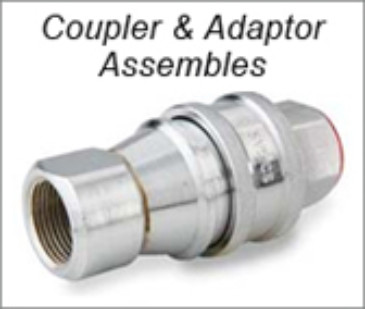
Camlock couplings.
These are the quick-connect fittings that join your hose to pumps, tanks, or transfer equipment. They look simple but they are not. The coupling is where pressure concentrates. It is where leaks begin. And in industries handling chemicals, fuel, or steam, a leak is not just a maintenance problem. It is a safety incident.
Here is why this matters more than most buyers realise.
What a Camlock Coupling Actually Does
A camlock coupling connects two parts of a fluid transfer system using a male adapter and a female coupler. You insert the adapter, press down the cam arms, and the connection locks. No threads, no tools, no long assembly time.
This design follows the MIL-C-27487 standard, now widely adopted alongside ASME B1.20.1 for cam and groove couplings. The standard covers six types, A through F, each suited to different connection configurations. The simplicity is the point. But simplicity under pressure demands precision manufacturing.
Where Flexible Hose Manufacturers Get It Wrong
A flexible hose is only as reliable as the fittings attached to it. This is the part that rarely gets enough attention.
When a flexible hose manufacturer cuts costs on coupling materials or tolerances, the hose assembly fails at the joint. Not along the hose body. At the end, where the coupling meets the fitting.
Common failure points include:
- Poor alloy selection leading to corrosion in wet or chemical environments
- Loose cam arms that cannot hold under surge pressure
- Gasket materials are incompatible with the fluid being transferred
- Dimensional inconsistencies that cause misalignment and slow leaks
The hose body might last five years. A poorly made camlock coupling might fail in five months.
What to Look for When Choosing
Let’s break it down.
The coupling material should match the application. Stainless steel suits food-grade and chemical transfer. Aluminium works well for fuel and general industrial use. Polypropylene handles mild chemical applications where metal contact is not ideal.
Gasket compatibility is non-negotiable. Check whether the gasket material, typically EPDM, NBR, or PTFE, works with your specific fluid. The wrong gasket swells, degrades, and contaminates the line.
Ask your flexible hose manufacturer for the coupling’s pressure rating at operating temperature. A coupling rated at 150 PSI at room temperature can drop by a considerable margin at 80 degrees Celsius. That gap is where failures happen.
The Bigger Picture
Procurement teams often compare hose assemblies on price per metre. That metric misses the real cost.
A hose assembly that fails mid-operation costs far more than the price gap between a quality coupling and a cheaper one. Lost production time, spillage, replacement labour, and compliance reporting all add up. In some industries, a single fluid transfer failure triggers a regulatory review.
The flexible hose manufacturer you choose should not just supply the hose. They should understand the full assembly, including how the coupling performs under your specific operating conditions.
Ask the right questions before you place an order. The answers will tell you more than any product brochure.
Featured Image Source: https://www.jreltd.com/images/quick-coupling/3.jpg