Modern manufacturing demands unprecedented levels of precision, and the fastening industry has responded with remarkable innovations in cylindrical component design. These seemingly simple elements form the backbone of countless mechanical assemblies, from delicate electronic devices to massive industrial machinery. Their evolution reflects broader trends in manufacturing technology, where tolerances measured in micrometres determine success or failure in competitive markets.
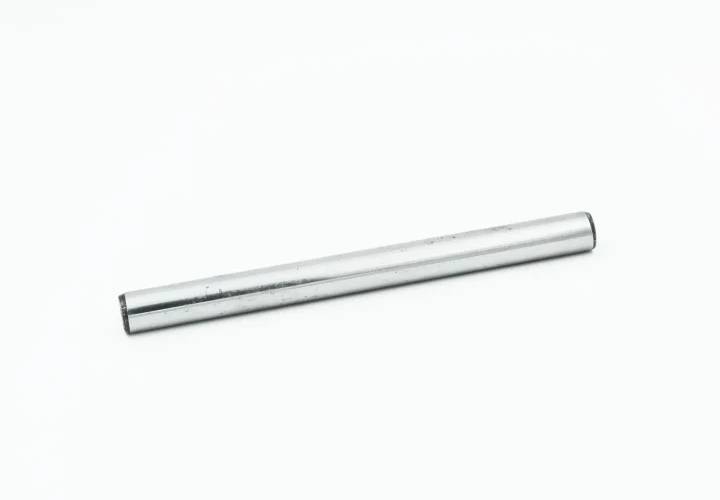
Dowel pins represent a cornerstone of precision positioning in manufacturing applications, offering unmatched accuracy in component alignment. These hardened steel cylinders ensure repeatable positioning across thousands of assembly cycles, reducing variability and improving overall product quality. Their standardised dimensions and exceptional straightness make them indispensable in jigs, fixtures, and automated production systems where consistency remains paramount.
Complementing these positioning elements, guide pins serve crucial roles in directing movement and maintaining alignment during assembly operations. These components feature specially engineered surfaces and geometries that facilitate smooth insertion whilst preventing binding or jamming. Their robust construction withstands repeated cycles of engagement and disengagement, making them essential for high-volume production environments where reliability directly impacts profitability.
The Evolution of Precision Manufacturing
- Traditional Methods Give Way to Advanced Techniques: Manufacturing has undergone a dramatic transformation over recent decades, moving from manual processes to highly automated systems. This shift demands components capable of maintaining precise tolerances under extreme conditions. Traditional fastening methods often introduced variability that modern production cannot tolerate, creating demand for more sophisticated solutions.
- Material Science Drives Performance Improvements: Advanced metallurgy has enabled the development of fasteners with superior hardness, wear resistance, and dimensional stability. Heat treatment processes now achieve precise microstructures that deliver consistent performance across temperature ranges. These materials maintain their properties even under cyclic loading conditions that would degrade conventional alternatives.
- Surface Engineering Enhances Functionality: Modern surface treatments extend component life whilst improving performance characteristics. Coatings reduce friction, prevent corrosion, and maintain dimensional accuracy over extended service periods. These enhancements allow manufacturers to specify tighter tolerances whilst achieving longer maintenance intervals.
Applications Across Diverse Industries
- Automotive Manufacturing Excellence: The automotive sector demands fastening solutions that withstand extreme environmental conditions whilst maintaining safety-critical functions. Precision cylindrical fasteners enable the production of components with exceptional dimensional accuracy, supporting the industry’s move towards lighter, more efficient vehicles. Engine assemblies, transmission systems, and safety components all rely on these elements for proper alignment and secure attachment.
- Aerospace Precision Requirements: Aircraft manufacturing represents perhaps the most demanding application for precision fasteners, where failure is simply not acceptable. These components must maintain their properties across wide temperature ranges whilst resisting vibration and fatigue loading. Weight considerations also drive the selection of materials and designs that maximise strength-to-weight ratios.
- Electronics Assembly Innovation: The electronics industry has embraced precision fastening solutions to enable miniaturisation whilst improving reliability. These components facilitate automated assembly processes that position delicate components with sub-millimetre accuracy. Heat dissipation requirements often dictate material selection, with thermal conductivity becoming as important as mechanical properties.
Automation and Manufacturing Efficiency
- Robotic Integration Capabilities: Modern manufacturing robots require fastening systems that support precise, repeatable operations without human intervention. Cylindrical fasteners designed for automated handling feature standardised dimensions and predictable insertion forces. Their consistent performance enables robots to operate at higher speeds whilst maintaining quality standards.
- Quality Control Through Design: Built-in features allow automated inspection systems to verify proper installation without additional sensors or complex programming. Geometric features provide visual or tactile feedback that confirms correct positioning and engagement. This approach reduces inspection time whilst improving detection of assembly errors.
- Reduced Downtime Through Reliability: Equipment reliability directly impacts manufacturing productivity, making component durability a critical design consideration. High-quality fasteners reduce unplanned maintenance whilst extending service intervals between scheduled inspections. This reliability translates into higher equipment utilisation rates and improved profitability.
Material Innovations and Performance
- Advanced Steel Alloys: Modern fastener manufacturing utilises specially formulated steel grades that combine hardness with toughness. These materials resist wear whilst maintaining dimensional stability under varying load conditions. Heat treatment processes achieve precise hardness profiles that optimise performance for specific applications.
- Improved fatigue resistance extends component life in cyclic loading applications
- Enhanced corrosion resistance reduces maintenance requirements in harsh environments
- Superior dimensional stability maintains tight tolerances throughout service life
- Optimised surface finishes reduce friction and improve assembly characteristics
- Alternative Material Solutions: Specialised applications often require materials beyond traditional steel alloys, including stainless steel, titanium, and advanced composites. These alternatives offer specific properties such as magnetic neutrality, chemical resistance, or extreme temperature capability. Material selection depends on application requirements and environmental conditions.
- Coating Technologies: Surface treatments provide additional protection and performance enhancement beyond base material properties. These coatings can reduce friction, prevent galvanic corrosion, or provide visual identification for different specifications. Advanced application techniques ensure uniform coverage and excellent adhesion to substrate materials.
Design Optimisation for Modern Applications
- Tolerance Engineering: Modern manufacturing requires fasteners manufactured to extremely tight tolerances, often measured in micrometres rather than millimetres. These precise dimensions ensure consistent performance across large production volumes whilst enabling automated handling systems. Statistical process control monitors dimensional characteristics throughout production to maintain quality standards.
- Geometric Considerations: Component geometry affects both performance and manufacturability, requiring careful optimisation during design phases. Features such as chamfers, radii, and surface textures influence insertion forces and alignment accuracy. Computer modelling predicts performance characteristics before physical prototypes are manufactured.
- Load Distribution Analysis: Advanced engineering analysis ensures fasteners can withstand expected loading conditions whilst maintaining safety margins. Finite element analysis identifies stress concentrations and optimises geometry for specific applications. This analytical approach reduces the need for extensive physical testing whilst improving confidence in design decisions.
Future Trends in Precision Fastening
- Smart Manufacturing Integration: Industry 4.0 concepts are driving development of fasteners with embedded sensors or identification features. These components can communicate installation status, loading conditions, or maintenance requirements to manufacturing systems. Connectivity enables predictive maintenance strategies that prevent failures before they occur.
- Sustainable Manufacturing Practices: Environmental considerations increasingly influence material selection and manufacturing processes. Recyclable materials and energy-efficient production methods reduce environmental impact whilst maintaining performance requirements. Life cycle analysis guides decisions about material selection and end-of-life disposal options.
- Customisation Through Advanced Manufacturing: Additive manufacturing and advanced machining enable economical production of customised fasteners for specific applications. These technologies reduce lead times whilst enabling geometric features impossible with conventional manufacturing methods. On-demand production reduces inventory requirements whilst improving responsiveness to customer needs.
The precision fastening industry continues evolving to meet increasingly demanding manufacturing requirements across diverse applications. These developments enable manufacturers to achieve higher quality standards whilst reducing production costs and improving efficiency. Investment in advanced fastening technology delivers measurable returns through improved product quality, reduced assembly time, and enhanced equipment reliability. Consider evaluating current fastening specifications to identify opportunities for performance improvements and cost savings in manufacturing operations.
Featured Image Source: https://sp-ao.shortpixel.ai/client/to_auto,q_glossy,ret_img/https://upsind.com/wp-content/uploads/2024/05/Dowel-pin-5.png