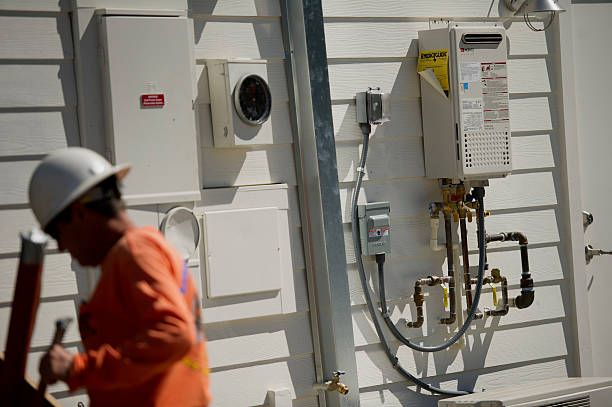
Tankless water heaters eliminate the standby energy loss common in traditional tank systems. Arizona homeowners benefit from on-demand heating that reduces gas consumption and lowers utility bills. These systems deliver hot water exactly when needed without maintaining a constant temperature reserve.
Arizona’s extreme climate creates unique challenges for home heating systems, when temperatures swing from scorching summer days to surprisingly cold winter nights. Water heating accounts for a substantial portion of household energy use. Families need reliable hot water without the burden of excessive gas or electricity costs.
Understanding Gas Tankless Systems
Eliminating Standby Heat Loss: Traditional water heater gas tanks maintain a constant temperature reservoir. This requires continuous fuel consumption even when nobody uses hot water. Heat escapes through tank walls despite insulation. The system burns gas around the clock to replace lost thermal energy. Tankless units only activate when you open a faucet. Water flows through a heat exchanger and reaches your desired temperature instantly.
Matching Supply to Demand: Arizona households experience varying hot water needs throughout the day, with morning showers creating peak demand periods and the evenings bringing dishwashing and laundry requirements. Tank systems heat and reheat the same water repeatedly, wasting fuel and compromising energy efficiency. Gas tankless heaters respond to actual usage patterns. The burner fires up when you need it and shuts down when you don’t.
Financial Impact on Homeowners
Long-Term Savings Through Cost Efficiency: Cost efficiency improves when you pay only for the water you heat. Traditional tanks lose 10 to 20 percent of fuel energy through standby losses. Gas tankless systems convert fuel to hot water with minimal waste. Your monthly utility bills reflect this reduced consumption. The difference becomes clear over months and years of operation.
Initial Investment Considerations: Tankless installation costs more upfront than standard tank replacements. Professional sizing ensures your system can handle peak demand. Moreover, proper venting requirements affect installation complexity, and gas line modifications might be necessary to support higher flow rates. The reduced operating costs typically offset the initial expense within a few years.
Climate-Specific Performance Benefits
Managing Hard Water Challenges: Phoenix-area water contains high mineral concentrations. Scale buildup affects all heating equipment, so tankless heat exchangers develop deposits that reduce thermal transfer rates. Regular maintenance prevents efficiency decline. Professional descaling treatments protect your investment and maintain performance levels.
Temperature Consistency in Extreme Weather: Arizona summers push cooling systems hard while water heaters work less. Winter months reverse this pattern. Gas tankless units maintain output temperatures regardless of incoming water temperature. You get the same hot shower whether the ground temperature is 50 or 80 degrees. The system adjusts fuel input to match conditions.
System Selection and Sizing
Calculating Flow Rate Needs: Proper sizing prevents performance issues and wasted capacity. Consider simultaneous usage scenarios:
- Two showers running at once require 5 gallons per minute
- Adding a dishwasher increases demand by 1.5 gallons per minute
- Washing machines contribute another 2 to 3 gallons per minute
- Total household demand determines minimum system capacity
Gas Supply Requirements: Your existing gas line might not support tankless operation. These units require higher instantaneous fuel delivery than tank heaters. A half-inch line often needs upgrading to three-quarter inch. Then, gas pressure testing confirms adequate supply. Undersized lines cause the burner to short-cycle and reduce lifespan.
Maintenance and Longevity
Extending System Life: Tankless heaters typically last 20 years compared to 10 to 12 years for tank models. Annual professional servicing prevents common problems. Technicians flush the heat exchanger to remove scale deposits andinspect burners and verify proper combustion. This preventive approach protects your efficiency gains.
Monitoring Performance Indicators: Watch for temperature fluctuations during use. Listen for unusual burner sounds, and check exhaust venting for proper operation. Early detection of issues prevents minor problems from becoming expensive repairs. Keep manufacturer documentation accessible for service technicians.
Gas tankless water heaters deliver real energy-efficiency benefits for Arizona homeowners who want lower utility costs and reliable hot water. The elimination of standby losses translates directly to reduced fuel consumption. Proper system selection and regular maintenance ensure these efficiency gains continue year after year. Contact George Brazil Plumbing & Electrical at 602-257-9000 for expert guidance on choosing and installing the right tankless system for your home’s needs. Our highly trained technicians evaluate your usage patterns and recommend solutions that balance comfort with long-term savings.
Featured Image Source: https://media.gettyimages.com/id/179699984/photo/a-noritz-corp-always-hot-tankless-water-heater-is-seen-on-the-side-of-the-model-home-as-a.jpg?s=612×612&w=0&k=20&c=R83jK75RqxdZT6iOjBrmhmKw39cl2zVezNAZNZwfPUw=