Somewhere between loading a container and receiving a delivery confirmation, a great deal can go wrong. Shipments sit in port longer than planned. Temperature excursions happen at handoff points. Cargo shifts without detection. And by the time any of these events surface in a system, the window for meaningful intervention has already closed.
When the Signal Is There but the Intelligence Is Not
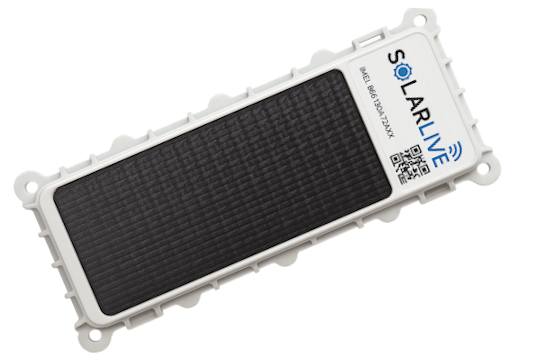
Data Over Distance: A solar GPS tracking device is a solar-powered location and condition tracker that gives freight teams live field intelligence across extended routes without relying on finite battery cycles. For long-haul ocean freight and overland corridors where tracker maintenance is impractical, continuous solar-powered uptime changes what route-level visibility actually means in practice.
Reading the Full Picture: Global supply chain visibility is real-time monitoring across every transport mode and territory, giving freight operators the contextual data needed to anticipate delays and act before conditions deteriorate. A coordinate on a map tells you where cargo is. It does not tell you how long it has been stationary, whether temperature variance has occurred, or whether a handoff completed correctly.
The Gap Between Knowing and Acting
Supply Chain Management at Operational Depth: Effective supply chain management requires accurate data that goes beyond location stamps. Dwell time analytics help operations teams identify where cargo is losing time across transshipment hubs, deviations from planned routing corridors, and irregular movement patterns are all signals that experienced logistics teams act on. When tracking data lacks this resolution, decisions default to assumption rather than evidence.
Freight Evidence at the Point of Dispute: Shipment condition at arrival is not a qualitative judgment. When a tracking record captures temperature ranges, shock events, and light exposure throughout a journey, that level of data turns a claims dispute into a documented audit trail. It changes the conversation with carriers, insurers, and receiving customers entirely, and removes the ambiguity that typically slows resolution.
What Proactive Freight Operations Actually Require
Tracking at Every Stage: Freight teams operating in high-value or regulated sectors rely on a combination of live tracking inputs to stay ahead of disruption. Shipment traceability across every transit leg gives operations directors a timestamped record of movement, condition, and transfer events rather than a single arrival confirmation at the end of a journey.
The most useful live tracking inputs across a multimodal journey include:
- Dwell time alerts when cargo remains stationary beyond defined thresholds
- Temperature breach notifications before condition windows are exceeded
- Geofence exit events that flag unauthorised route deviations
- Shock and orientation readings logged at the point of incident
A Structured Sustainability Process: The sustainability tied to reusable tracking hardware is practical, not aspirational. When devices are recovered, recharged, and redeployed through a managed returns cycle, the operational cost per shipment decreases and the volume of hardware sent to landfill reduces proportionally. Over extended deployment periods, the environmental and financial case for circular tracking infrastructure becomes difficult to argue against.
Where Operational Data Becomes a Strategic Asset
Multimodal Freight Tracking Beyond the Obvious: There is a measurable difference between knowing a shipment has arrived and understanding what happened to it on the way. Multimodal freight tracking gives logistics teams a timestamped record of every transit leg, every condition reading, and every point of transfer, making it possible to identify where problems originate rather than simply where they end up.
From Passive Records to Informed Decisions: Long-haul freight teams that rely on retrospective data are always reacting. The shift toward continuous, sensor-level tracking gives operations directors the ability to intervene before a delay compounds, reroute before a condition threshold is breached, and document before a claim is raised. That shift does not happen through better reporting. It happens through better data at the point of movement.
Visibility That Moves With Your Cargo
Freight organisations that treat a location ping as the end point of visibility are operating on incomplete data. Continuous tracking across every transport mode gives logistics teams the evidence to intervene before delays compound or cargo conditions deteriorate. For teams ready to move beyond reactive monitoring, field data quality at each transit stage is where that shift begins.
Featured Image Source: https://eadn-wc01-16575410.nxedge.io/wp-content/uploads/2021/06/solarlive-mockup4.jpg