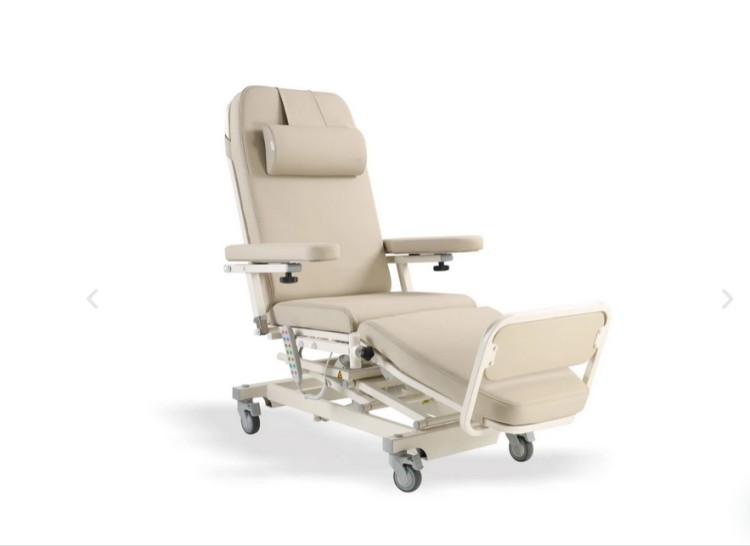
Buying the wrong chair for a clinical setting costs more than money. It costs patient trust, staff time, and sometimes, clinical outcomes. If you run an oncology centre or a dermatology clinic, perhaps both, you already know how much weight the right chair carries in day-to-day operations.
This guide covers two specific categories: chemotherapy chairs and derma chairs. They serve different patient populations and different procedures, but they share one common requirement. The patient sitting in them is often anxious, uncomfortable, or physically vulnerable. The chair needs to do more than hold a person up.
What a Chemotherapy Chair Actually Needs to Do
A chemotherapy infusion session can last anywhere from 30 minutes to several hours. Patients are often fatigued, sometimes nauseous, and always aware of how much time they have left. Chemotherapy chairs that cannot position them correctly, or that cause pressure on the lower back and legs over time, make a long session feel longer than it actually is.
The features that matter most are motorised adjustment for the backrest, leg rest, and footrest, a low access height so patients with limited mobility can sit and stand without assistance, and Trendelenburg positioning for patients who experience a drop in blood pressure during infusion. A quick-release backrest for CPR access is not a feature you expect to use often, but its absence is not something you want to discover at the wrong moment.
Programmable memory functions are worth considering if multiple doctors or nurses use the same chair across shifts. Each clinician can pre-set a preferred position instead of adjusting manually every time.
Upholstery material matters here, too. Chemotherapy drugs and disinfectants are both harsh on surfaces. Chairs with disinfectant-resistant, abrasion-resistant upholstery last longer and reduce the risk of surface degradation over time.
The Derma Chair
Dermatology procedures are shorter on average, but the positioning demands are different. A derma chair needs to give the clinician full access to the treatment area while keeping the patient stable and comfortable.
The Mridul Derma Chair from Esthetica uses a 4-motor system with electronic tilt and a programmable handset. That kind of control lets a dermatologist adjust the chair mid-procedure without interrupting the patient or calling for assistance. The 2025 model addresses the need for precise backrest and leg rest angles that static chairs simply cannot offer.
A derma chair that cannot tilt adequately, or one where the clinician has to physically assist the patient into position, slows down your throughput and creates unnecessary physical strain for staff.
What to Ask Before You Buy
Inquire about the number of motors and what each one is used for. Also, inquire about the height of the chair and whether it is suitable for the type of patients you treat. And finally, inquire about the type of upholstery material’s resistance to your specific disinfectants used in the clinic. And lastly, inquire about the warranty of the mechanical parts and the electrical parts separately, as these parts tend to fail first in most chairs.
Esthetica Medical Furniture manufactures both chemotherapy chairs and derma chairs from its facility in IMT Manesar, Gurgaon, with delivery available across 55+ cities in India.
Featured Image Source: https://www.estheticamedicalfurniture.com/products/chemotherapy-chair/