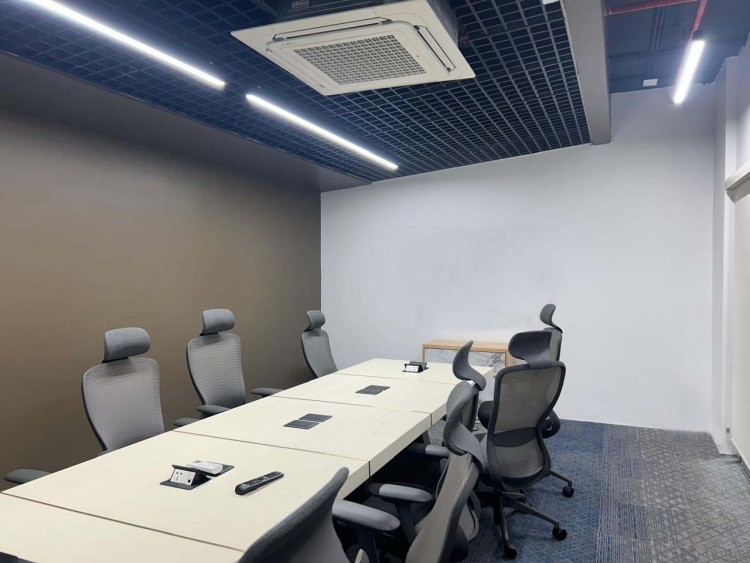
Planning a workspace is not about aesthetics first. It rarely is, when done properly. The aesthetic comes later, once the functional decisions are already made.
Considering how people actually work
Before a single layout gets drawn, a good commercial interior designer in Mangalore asks how your team spends its day. Not what your org chart says, but what actually happens. Do people collaborate in short bursts or work in long, uninterrupted stretches? Is there client-facing activity that needs a separate zone? Are there roles that need quiet but sit next to roles that do not?
Most interior design firms in Mangalore worth working with spend real time on this before touching the design. The ones that skip straight to furniture selections are probably not the right fit for a serious project.
Zoning is where most offices go wrong
A workspace typically needs three kinds of zones: areas for focused work, areas for collaboration, and areas for informal rest or transition. The mistake most people make is treating the whole floor as one zone, or dividing it with walls and calling it done.
Zoning is not just about walls. It is about acoustics, sightlines, lighting levels, and foot traffic. A collaboration zone placed at the centre of a floor will bleed noise into everything around it. That is a planning decision, not a furniture problem.
What separates good spaces from average ones
Something worth knowing is presented here. The Bureau of Indian Standards has issued guidelines for space per person in the workplace, ventilation, and fire egress in NBC 2016 (National Building Code of India). The designer is not only being cautious when designing within these parameters. The designer is protecting you from costly changes later on.
This is where interior design firms with both design and engineering experience have an edge. Knowing what looks good is one part of it. Knowing what is compliant, structurally sound, and serviceable over the years is another thing entirely.
What happens when planning is skipped
Perhaps the clearest sign that a workspace was not planned well is when employees start adapting around it. People bring in their own lamps because overhead lighting is too harsh. Meeting rooms get avoided because they echo. Certain desks stay empty because the air conditioning hits them directly.
None of that is an accident. It is the result of decisions that were made too quickly, or not made at all.
Check this before you commit
Ask your designer to walk you through the zoning logic before any visual presentations. If they cannot explain the spatial reasoning behind the layout, that is worth pausing on. The best workspace designs are logical before they are beautiful.
If you are planning a new office or rethinking an existing one, start with a conversation about how the space will actually be used. That is where the real planning begins.
Featured Image Source: https://yutoridesigns.in/wp-content/uploads/2025/07/confrence-room.jpg